
Transactional Content Management
PRODUCTS
-

Technology solutions for life sciences that get products to market quickly and efficiently.
-

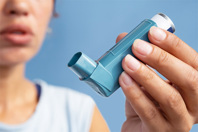
Siegfried is an expert in manufacturing capsule-based dry powder inhalation products.
-

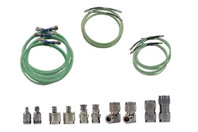
Discover high-performance RF cables and adapters up to 40 GHz. These products feature customized options, rugged construction, and a three-year warranty, ensuring reliability for your testing needs.
-

Ergomed places patients and their care partners’ needs at the core of our services. We strive to build empathetic relationships with patients and their care partners, not just during the trial but also before and after. Our team provides personalized support, aiming to alleviate the burden of study participation. Ergomed and our trusted partners are deeply committed to bringing lifesaving treatments to patients.
-

Predict Genotoxic & Carcinogenic Endpoints to Meet ICH M7(R2) Guidelines
ACD/Impurity Profiling Suite predicts a variety of toxicological endpoints to help you assess the genotoxic and carcinogenic potential of impurities and degradants. Developed through a collaborative agreement with the US Food and Drug Administration (FDA), the software can be used as part of your ICH M7(R2) workflow—to help prepare regulatory submissions and remain compliant.
- Determine the ICH M7(R2) classification for impurities and degradants
- Predict 21 toxicological endpoints from structure; for mechanisms of hazardous activity including:
- Mutagenicity (AMES test and other procaryote and eucaryote test systems)
- Clastogenicity
- Other DNA damage
- Carcinogenicity
- Endocrine disruption mechanisms
- Identify potentially hazardous structural fragments responsible for carcinogenic and genotoxic activity
- Gain insight into the possible mechanisms of toxic effects
- Assess the reliability of predictions



WHITE PAPERS AND CASE STUDIES
-
 How Sharp Packaging's Clinical Packaging Process Is 30% Faster
Discover how digitized workflows and real-time verification are helping streamline clinical trial packaging, reduce complexity, and improve quality in a high-stakes, time-sensitive environment.
-
 Deployment Of A Low-Power LoRa LPWAN Sensor Network For Environmental Monitoring In Antarctica
Maintain complete situational awareness over remote, unpowered infrastructure. A duty-cycled sensor network buffers daily environmental data and transmits via scheduled satellite windows, delivering reliable structural oversight in extreme off-grid environments while minimizing power consumption.
-
 Robust Database Characterizes And Optimizes Product Development
Integrating material characterization data with process parameters accelerates drug development, reduces empirical testing, and strengthens regulatory compliance.
-
 AVT - AVT EZ Valve Install Keeps Work On Track At German Oil Refinery
Industrial repairs at height require lightweight, efficient solutions to maintain production schedules. Under-pressure valve insertion allows for the rapid creation of isolation points on elevated pipelines, ensuring system continuity and safety without the need for extensive shutdowns.
-
 Transforming Clinical Trial Management
See how Vestigo® can transform your study management — streamline workflows, strengthen compliance, and eliminate inefficiencies by adopting a smarter, digital-first approach today.
-
 Inside A Collaboration To Design Cutting Edge Modular Cleanrooms
Learn about a collaboration that has yielded advanced modular cleanrooms, integrating cutting-edge building automation, critical monitoring, and data aggregation for manufacturing intelligence.
-
 Pioneering Cancer Research Meets Unparalleled Veeva Vault Integration
A biotech company revolutionizing cancer treatment faced delays due to a complex, error-prone document review process. Discover how integrating an innovative strategy transformed their workflow.
-
 Still Using Paper Diaries To Capture PRO Data? Read This.
Access real-world examples of how electronic patient-reported outcome measures (PROMs) optimize data quality and reliability and improve the statistical power of trial data.
-
 Racibórz Waterworks Reduces Costs With Unified Enterprise SCADA
Unifying fragmented industrial control platforms streamlines operational oversight across municipal water networks. Standardized graphic displays and redundant architectures cut hardware overhead, simplify compliance reporting, and ensure continuous visibility during critical process shifts.
-
 Creating Sustainable Data In The Laboratory
In a laboratory setting, data is everywhere. Learn in-depth about data challenges, the importance of data lifecycle management in laboratories, and the need for data sustainability.
-
 Emory University Uses Oracle Cloud To Help Fight Parkinson's Disease
Discover how researchers at Emory University were able to overcome challenges with computational resources and enable faster compute speeds and HIPAA compliance.
-
 The Data Analyst Who Helped Rebuild Waco's Stormwater Program After A Citywide Restructure
Eliminating manual paper processing in municipal compliance operations frees up valuable staff resources. Centralizing inspection records and automating testing notifications strengthens regulatory oversight and maintains continuous audit readiness for growing utilities.











NEWS
-
Topological Solitons Power A Chip-Scale Frequency Comb Source3/25/2026
Caltech scientists have developed a new way to produce optical frequency combs—important tools in devices that keep time and measure distances very precisely—at the chip scale, an advance that should make it easier to incorporate such combs in optical devices and more practical to use them outside the laboratory.
-
From Smokestack To Underground Storage: Waikato Researcher Investigates Emission Solutions6/29/2026
With newly announced funding, University of Waikato researcher Dr Andrew La Croix will explore whether carbon emissions from power stations could be safely stored underground to help reduce climate change.
-
Timing Matters: Early Planting Benefits Soybean In Unfertilized, Low-Fertility Fields2/5/2025
Unfertilized soybean fields with lower soil fertility should be planted earlier than high fertility fields, according to a University of Illinois Urbana-Champaign study that re-evaluates longtime soil testing.
-
With Passive Approach, New Chips Reliably Unlock Color Conversion11/14/2025
Over the past several decades, researchers have been making rapid progress in harnessing light to enable all sorts of scientific and industrial applications.
-
Proven Quantum Advantage: Researchers Cut The Time For A Learning Task From 20 Million Years To 15 Minutes9/25/2025
Researchers at the Technical University of Denmark (DTU) and international partners have demonstrated that entangled light can cut the number of measurements needed to learn the behaviour of a complex, noisy quantum system by an enormous factor.