
OCR
PRODUCTS
-

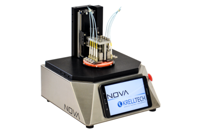
The multi-configurable NOVA™ polishing system delivers automated, scalable processing for diverse optical components, seamlessly handling connectors, waveguides, and specialty bare fibers.
-

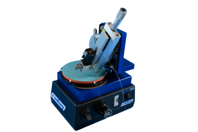
Radian™ polishes bare fiber, rods, or bundles at variable angles, with interchangeable adapters and swap-in workholders for connector polishing (flat, UPC, angled).
-

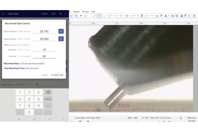
NOVA™ Software Upgrade Kit adds Enhanced Microfeed with programmable rates down to 5 µm/min, plus pop-up prompts and improved folder/program management.
-

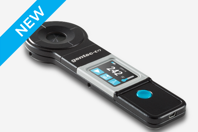
The PRONTO-250-EZ is a compact, handheld laser power and energy meter designed for demanding environments, combining performance, flexibility, and user-friendly operation in a rugged, easy-to-clean package.
-

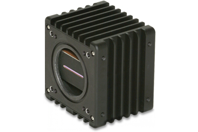
The SUI 1024-LDH2 is a second-generation, high-speed 1024-pixel linescan InGaAs camera that increases the A-line rate to 91,911 lines per second (lps).
WHITE PAPERS AND CASE STUDIES
-
 Modelling TPDs Utilizing Computational And Medicinal Chemistry Approaches
Through a carefully executed strategy, see how we identified novel degrader molecules with the right physicochemical properties to achieve robust degradation of the target Protein of Interest (POI).
-
 Bringing A Biosimilar For Oncology To Market: Injectable Packaging From Early Development To Commercialization
While in their early-stage development of a mAb biosimilar for oncology treatment, a large biopharmaceuticals company sought a packaging recommendation: a stopper to maintain high-quality standards.
-
 Leading Recruitment With A Strong Alzheimer's Referral Pool
A strong referral network helped the Gainesville site rapidly recruit pTau217‑positive Alzheimer’s participants while upholding high data quality, boosting enrollment and outperforming other sites.
-
 Enhancing Clinical Supply Chain With Signant SmartSignals Supplies
A global pharma leader improved supply chain efficiency and compliance by digitalizing processes with Signant's SmartSignals Supplies, achieving better visibility, traceability, and reduced errors.
-
 Ultra-Narrowband Optical Filters Pushing Boundaries From The UV To The LWIR
Discover how advancements in ultra-precise manufacturing techniques can pave the way for revolutionary technology that can change the world.
-
 Enhancing Viral Clearance Prediction And Process Optimization
MockV® technology enables early, in-house viral clearance assessment, helping biopharma developers improve process robustness, reduce costs, and enhance safety before GMP manufacturing begins.
-
 AMERICAN Plays A Role In Rebuilding Puerto Rico's Infrastructure
AMERICAN is helping rebuild Puerto Rico’s vital water infrastructure after Hurricane Maria, supplying American-made products to strengthen resiliency for 3.5 million residents and millions of annual visitors.
-
 Monitoring Atrial Fibrillation In Clinical Research: The Case For Continuous Wearable Assessment
Learn how continuous wearable monitoring can uncover AFib that standard ECGs miss and strengthen trial-grade endpoints.
-
 End-To-End Clinical, Biometrics, And Regulatory Support In Neurology
Discover how an integrated NDA strategy aligned data, vendors, and regulatory execution to achieve an on-time submission and approval without major FDA queries.
-
 How To Get Products To Patients Faster With A Connected QMS
BioBridge Global faced challenges with paper-heavy processes that risked errors and delays. Discover how digital solutions streamlined their operations and improved regulatory efficiency.
-
 Revolutionizing Biofilm Research: High-Resolution, Real-Time Imaging with ZeGage Optical Profiler
A university lab optimized biofilm research with Zygo’s ZeGage Optical Profiler, enabling high-resolution, real-time, non-contact imaging that accelerates data collection, enhances accuracy, and preserves biofilm integrity.
-
 The Benefits Of Customised Optical Filters For Machine Vision
Customized optical interference filters optimize machine vision performance by tailoring light control for specific tasks—enhancing precision, speed, and reliability in industrial inspection, automation, and quality assurance applications.









NEWS
-
New Light-Based Chip Boosts Power Efficiency Of AI Tasks 100 Fold9/8/2025
A team of engineers has developed a new kind of computer chip that uses light instead of electricity to perform one of the most power-intensive parts of artificial intelligence — image recognition and similar pattern-finding tasks.
-
SPIE, the international society for optics and photonics, announces its 2025 Society awards1/9/2025
The 21 award recipients represent an exciting range of stellar achievements across light-based sciences and technologies.
-
TTI Technologies Launches New Cost-Effective Barcode Scanner Solution For Hotels2/23/2026
TTI Technologies, a global hospitality technology company, is proud to announce the launch of its latest innovation, a cost-effective barcode scanner solution designed specifically for hotels.
-
Simbe Expands Next-Generation Computer Vision Technology To Transform Retail Execution5/20/2025
Simbe, the global leader in shelf digitization, today announced significant advancements to Simbe Vision™, its AI-powered computer vision (CV) technology, further solidifying the company's position as the retail industry's most advanced in-store intelligence solution.
-
3D Imaging Breakthrough Could Mean Step Change For Security And Defence Applications2/7/2025
Scientists have developed a detection system that could vastly improve the accuracy of human facial and activity recognition at long distances and through obstructions like fog, smoke or camouflage.