
A Gentle Introduction To The Structure Of Water
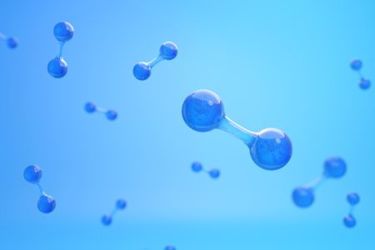
Water’s essential role in industrial and biological processes stems from its unique molecular architecture. While simple in composition, the H₂O molecule features a distorted tetrahedral geometry and a significant electric dipole that drives the formation of hydrogen bonds. These bonds, though transient and lasting only picoseconds, create a dynamic network that accounts for water's anomalous physical properties, such as its high boiling point and the rare characteristic of being less dense in its solid state than as a liquid.
In liquid form, water behaves as a shifting mass of molecular clusters rather than a static arrangement. Understanding these microscopic interactions—from surface tension to the formation of hydration shells around ions—is vital for optimizing water treatment and chemical applications. Explore the fundamental science of aquatic structures and the molecular forces that define water’s behavior by reading the full white paper.
Get unlimited access to:




Enter your credentials below to log in. Not yet a member of ECM Connection? Subscribe today.